
Flea Control
Flea control works best when treatment, cleaning, and pet care happen together. Critter Ridders Pest Control helps homeowners and businesses in Kitsap and Jefferson Counties identify flea activity, inspect the areas involved, and develop a treatment plan. We explain how to prepare, when people and pets can return, and what to expect afterward. Bites alone do not confirm a flea infestation.
We treat flea infestations in homes and businesses. When our evaluation identifies outdoor flea activity, we may recommend targeted treatment of affected areas, including places where animals rest. We do not apply flea products to animals. Work with your veterinarian on appropriate flea care for your pets, and tell our team about all animals on the property before service.
Cat Fleas
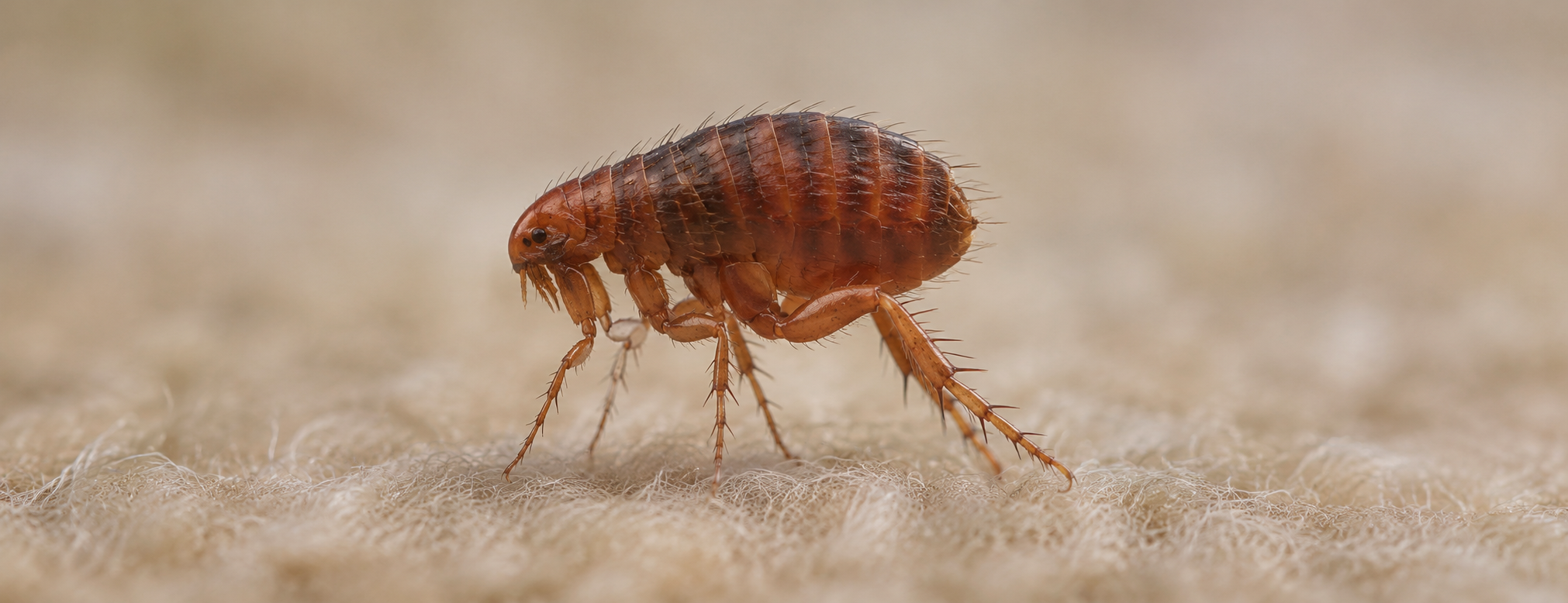
Cat Flea — CRPC
Despite their name, cat fleas commonly affect both cats and dogs. Adult fleas are small, reddish-brown, wingless insects with strong jumping legs. Eggs can fall from an animal into carpets, bedding, and other resting areas, where immature stages develop. We look for evidence of fleas and their source before recommending treatment. Coordinating property treatment with veterinary flea care helps reduce the chance of the problem continuing.
Fleas in Carpets & Pet Resting Areas

Pet Resting Areas — CRPC
Cat fleas develop through four stages: egg, larva, pupa, and adult. Eggs fall from animals into carpets, bedding, and floor cracks, where immature fleas develop. Pupae are enclosed in protective cocoons that make this stage especially difficult to control. Newly emerged adult fleas may continue appearing for about two weeks after treatment and sometimes longer. This does not automatically mean the treatment failed. Our approach targets adult fleas and interrupts immature development, supported by vacuuming, laundering, and veterinarian-guided flea care for pets. We evaluate continued activity and recommend follow-up based on what we find.